













Pain from Lumbar Degenerative Disc Disease
Description
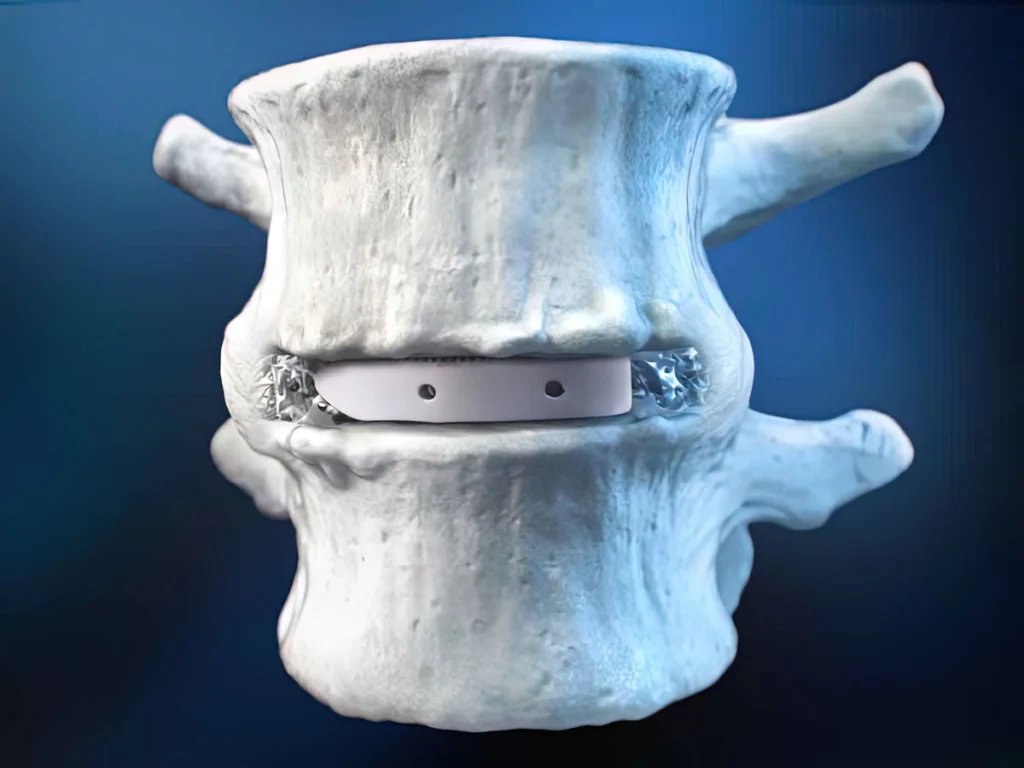
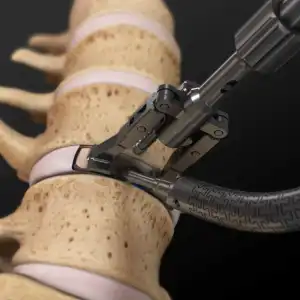
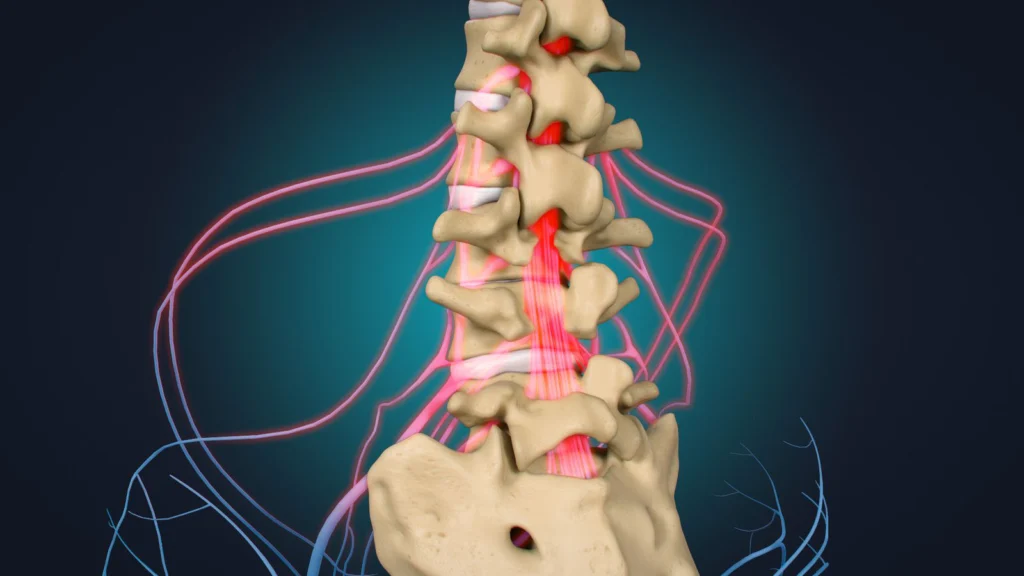
Lumbar Degenerative Disc Disease (DDD) is a prevalent condition characterized by lower back or radiating pain resulting from damaged intervertebral discs in the lower spine. These discs play a crucial role in providing support for the joints in the spine and acting as shock absorbers, enabling comfortable movement in daily life. While degenerative processes naturally occur with age, some individuals may experience discomfort due to DDD. Ghost Medical created a medical illustration for Neo Medical that explores the causes, symptoms, and available treatment options for Lumbar Degenerative Disc Disease.
Causes and Symptoms
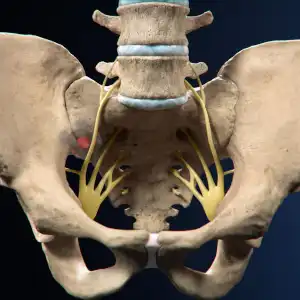
The intervertebral discs in the spine consist of different tissue types. The tough outer layer, known as the annulus fibrosus, surrounds and protects the disc’s soft inner core, called the nucleus pulposus. The discs gradually undergo degeneration as a part of the natural aging process. However, in some cases, this degeneration can cause problems. The pain associated with DDD tends to occur in episodes, ranging from a few hours to a few days, and primarily focuses on the lower back. The pain may also radiate into the hips and upper legs. Sitting can intensify the pain as it places a greater load on the spine.
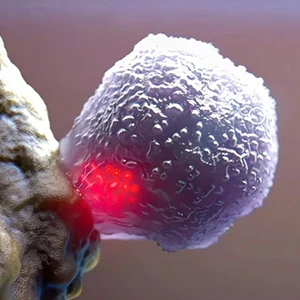
There are several causes for the discomfort experienced in Lumbar Degenerative Disc Disease. Firstly, the breakdown of the tough outer tissue of a disc can result in the release of inflammatory proteins from the inner part of the disc, which can irritate the surrounding nerves. Secondly, when the disc degenerates to the point where it can no longer effectively act as a shock absorber or support joint function and spinal stability, painful muscle spasms may occur as the lower back muscles attempt to compensate. In advanced cases, the collapse of the intervertebral space can lead to compressed nerve roots and cause significant leg pain, known as radiculopathy.
Treatment Options
For many individuals, degenerative disc disease stabilizes over time and can be managed with non-surgical treatments. However, for those with long-lasting symptoms that do not respond to conservative measures, surgical intervention can provide relief and significantly improve their quality of life.
Non-surgical treatments for Lumbar Degenerative Disc Disease include physical therapy, pain medications, and lifestyle modifications. Physical therapy aims to strengthen the muscles supporting the spine and improve flexibility, reducing pain and enhancing function. Pain medications, such as nonsteroidal anti-inflammatory drugs (NSAIDs), muscle relaxants, or opioids, may be prescribed to alleviate pain. Lifestyle modifications, including maintaining a healthy weight, regular exercise, and proper body mechanics, can also help manage symptoms.
When non-surgical interventions fail to provide adequate relief, surgical options may be considered. The specific surgical approach depends on the severity of the condition and individual patient factors. Common surgical procedures for Lumbar Degenerative Disc Disease include discectomy, spinal fusion, and artificial disc replacement. Discectomy involves the removal of the damaged disc to relieve pressure on the nerves. Spinal fusion aims to stabilize the spine by fusing adjacent vertebrae together. Artificial disc replacement involves removing the damaged disc and replacing it with an artificial disc to maintain spinal motion.
Conclusion
Lumbar Degenerative Disc Disease is a common condition that can cause lower back pain and discomfort due to damaged intervertebral discs in the lower spine. While degenerative processes are a natural part of aging, some individuals experience symptoms that require intervention. Non-surgical treatments, such as physical therapy, pain medications, and lifestyle modifications, can often manage the condition effectively. However, when non-surgical options fail, surgical intervention can provide long-term relief and improve the quality of life for those with persistent symptoms. With advancements in surgical techniques, individuals suffering from Lumbar Degenerative Disc Disease can find hope for a more comfortable and active life.
Specialty: Neurology, Orthopedic, Patient Education, Spine, Urology · Content type: Medical Illustration · Produced by: Ghost Medical — Medical Illustration
Client

Neo Medical
Share this content:
Disclaimer
The medical visualizations showcased by Ghost Medical are intended solely to demonstrate our portfolio work and are not intended to be labeled as reliable FDA claims in the healthcare market. Surgeons and healthcare professionals should exercise caution and conduct their own research before relying solely on the information presented in the visualizations. Please be aware that while our work strive to accurately represent medical concepts and technologies, they may not always reflect the current state of the medical industry.
Bibliography
Bibliography
Post Type
Blog
Page Name
Understanding Pain from Lumbar Degenerative Disc Disease
Author
Ghost Productions, Inc.
Publisher
Ghost Productions, Inc.
Date Published
Jul 11, 2023
Citation Styles
AMA Style
Ghost Productions, Inc. Understanding Pain from Lumbar Degenerative Disc Disease [Blog]. Ghost Productions, Inc. Published Jul 11, 2023. Available at https://ghostmedical.com/image/pain-from-lumbar-degenerative-disc-disease/
APA Style
Ghost Productions, Inc. (Jul 11, 2023). Understanding Pain from Lumbar Degenerative Disc Disease [Blog]. Ghost Productions, Inc. Retrieved from https://ghostmedical.com/image/pain-from-lumbar-degenerative-disc-disease/
MLA Style
Ghost Productions, Inc. “Understanding Pain from Lumbar Degenerative Disc Disease.” Ghost Productions, Inc., Jul 11, 2023, https://ghostmedical.com/image/pain-from-lumbar-degenerative-disc-disease/. [Blog]